
Content marketing sounds simple in theory. Create content, publish it, and traffic will come. But in reality, most businesses struggle because they treat content as an activity instead of a strategy.
In the digital space today, visibility is not just about posting regularly. It is about publishing the right message, for the right audience, at the right time. A thoughtful content marketing approach helps brands stay relevant, earn trust, and slowly influence buying decisions without sounding overly promotional.
Businesses that take content planning seriously usually experience better engagement, stronger search presence, and more consistent lead flow over time.
What Is a Content Marketing Strategy?
A content marketing strategy refers to a systematic framework used to plan, create, distribute, and optimize content aligned with specific business objectives and audience needs. It involves identifying target segments, mapping content to different stages of the buyer journey, and maintaining consistency across digital platforms.
Organizations that adopt a structured approach toward content planning are better positioned to achieve measurable outcomes such as increased website engagement, improved keyword rankings, and higher conversion potential.
What Does a Content Marketing Strategy Really Mean?
A content marketing strategy is not just a content calendar or a list of blog topics. It is a broader plan that connects business goals with audience expectations.
In practical terms, it answers questions like:
- Who exactly are we trying to reach?
- What kind of problems are they trying to solve?
- Where are they searching for solutions?
- What content format will make them stay longer?
Brands that invest in content marketing services often notice that their campaigns become more focused and measurable instead of random posting efforts.
Why Is Content Marketing So Important for Growth Today?
Modern customers do not respond well to aggressive promotions. They prefer brands that educate them first and sell later. This shift in behavior has made content marketing one of the most reliable long-term growth channels.
Major Benefits of Content Marketing
- Gradual increase in organic traffic
- Better brand recall and credibility
- Higher engagement across digital platforms
- Strong support for overall digital marketing strategy
- Sustainable pipeline for future leads
Content works slowly but builds authority in a way paid campaigns cannot always achieve.
How Can Businesses Understand Their Audience Better?
Many businesses create content based on assumptions. That is where most strategies fail. Understanding audience intent requires observing how users search, what they click, and how long they stay on certain topics.
It helps to study:
- Customer pain points
- Common search queries
- Industry discussions and trends
- Feedback from existing customers
When content reflects real user concerns, it naturally performs better.
What Type of Content Usually Performs Well?
There is no single winning format. Performance often depends on timing, relevance, and clarity of message. However, certain formats consistently show stronger engagement.
High Performing Content Formats
- Detailed blog posts that answer specific questions
- Real case studies that show practical outcomes
- Short educational videos explaining complex topics
- Visual summaries like infographics
- Downloadable guides that offer deeper insights
Using such formats strategically improves overall online marketing services effectiveness and helps reach users at multiple touchpoints.
Where Does SEO Fit Into Content Marketing?
SEO is what makes content discoverable. Without it, even well-written content can remain invisible. But SEO today is not about stuffing keywords. It is more about relevance, structure, and depth.
Businesses should focus on:
- Writing naturally around key topics
- Maintaining logical heading flow
- Linking related content internally
- Updating older posts when trends change
A practical SEO content strategy ensures that content keeps working long after it is published.
Why Does Consistency Matter More Than Perfection?
One common mistake businesses make is waiting to create “perfect” content. In reality, consistency builds more momentum than occasional high-effort posts.
Benefits of Consistent Publishing
- Signal reliability to search engines
- Keep audiences engaged
- Build topical authority gradually
- Improve learning through performance data
A simple content calendar can reduce decision fatigue and keep marketing efforts structured.
Can Content Marketing Really Generate Leads?
Yes, but not instantly. Content marketing works by building trust first. When users repeatedly find helpful information from the same brand, they become more open to exploring services or products.
Lead Generation Content Approaches
- Solution-oriented blog posts
- Strategic guides or templates
- Subtle but clear calls-to-action
- Distribution through relevant channels
These steps support long-term lead generation marketing initiatives without making the audience feel pressured.
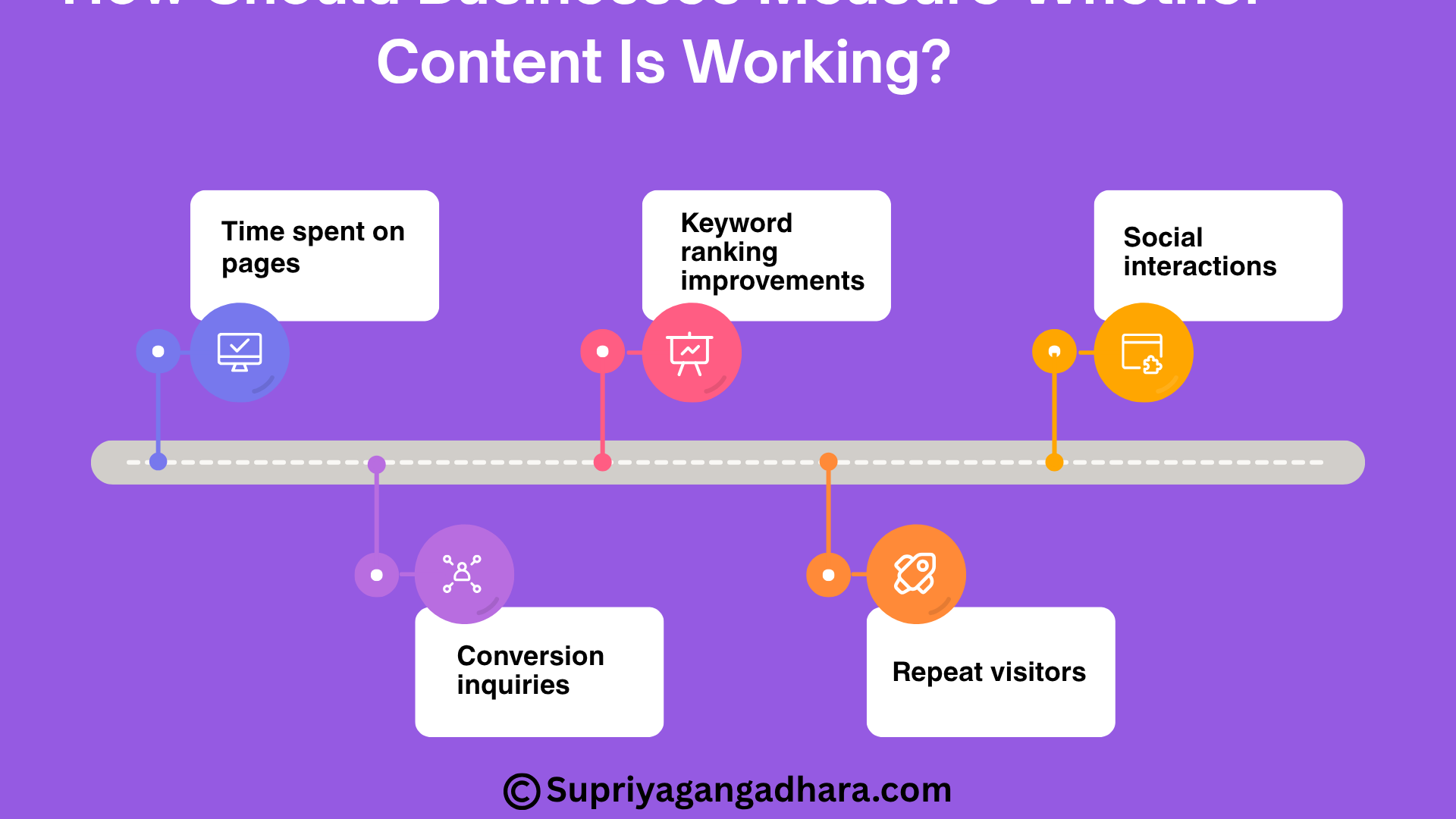
How Should Businesses Measure Whether Content Is Working?
Content performance should not be judged only by traffic numbers. Engagement quality matters more.
Businesses should monitor:
- Time spent on pages
- Conversion inquiries
- Keyword ranking improvements
- Repeat visitors
- Social interactions
Over time, these signals reveal what content truly connects with the audience.
Conclusion
Content marketing is not a quick-win tactic. It is a gradual process of building relevance, authority, and trust. Businesses that approach it with patience and strategic clarity are more likely to see meaningful digital growth.
By aligning content marketing services, digital marketing strategy, online marketing services, SEO content strategy, and lead generation marketing, organizations can create a sustainable marketing engine that supports both visibility and revenue goals.